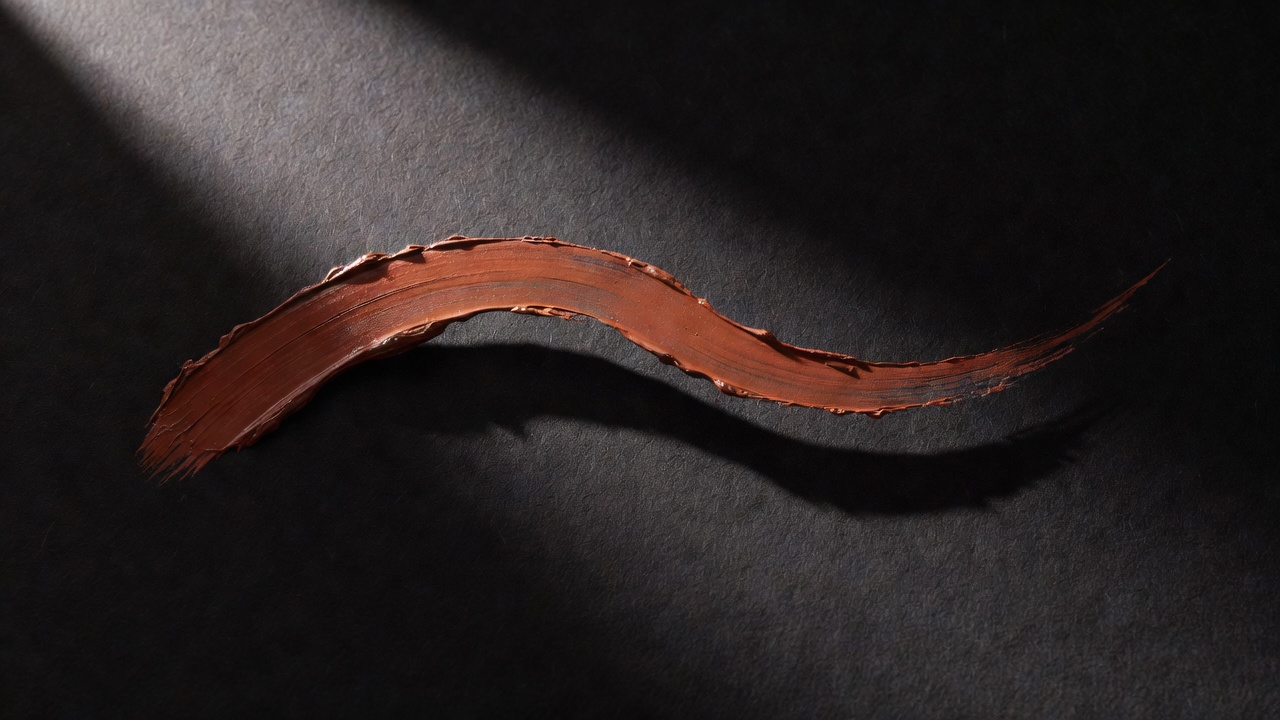
If rhythm is the part of music you tap, melody is the part you hum. It has a shape: it climbs, falls, lingers, leaps. Singers talk about phrases — stretches of melody that feel like one breath. A phrase is a natural unit for a single line on paper, which makes it one of the most rewarding things to translate.
A quick word on conventions. In Western staff notation, higher notes sit higher on the page, so many of us instinctively draw rising pitch as a rising line. Research on cross-modal perception suggests this pairing is widespread, yet it is not fixed: some languages describe pitch as thin and thick rather than high and low, and many artists map pitch to lightness, size or texture instead. Treat height as one option among several.
Step-by-step: one phrase, one line
Trace the phrase in the air
Choose a melody with a clear voice or lead instrument. Hum along once, then hum again while your index finger draws the phrase in the air. Notice where your hand wants to go. Does it rise on the long note? Swoop at the end? This rehearsal costs nothing and frees the wrist.
Draw one breath without lifting
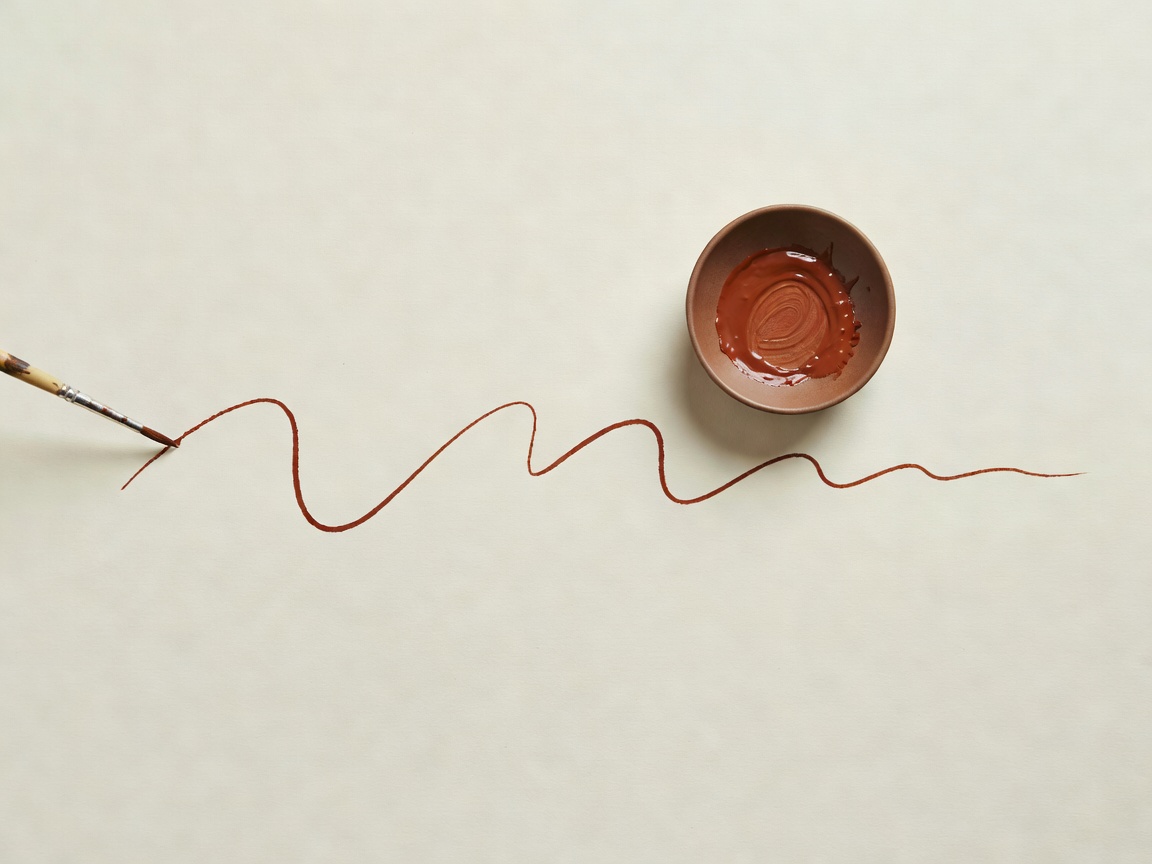
- Line begins low where the voice enters softly.
- The loop marks a held, ornamented note.
- Brush lifts only when the singer breathes.
Load the narrow brush and draw the phrase from the left edge, keeping the brush on the paper until the singer breathes. Then stop. Look at what you made before beginning the next phrase. This simple rule — one breath, one line — gives your drawing a structure borrowed directly from the music.
Let pressure follow loudness
Repeat the phrase on a new sheet, now pressing down as the music swells and lifting as it fades. The line thickens and thins. Dynamics — the musician's word for loud and soft — have become visual weight. If you prefer, map loudness to darkness instead by thinning the paint as the music quietens.
Draw the variation
Most melodies return in altered form. When the phrase comes back, draw it again directly below the first. Where the new line departs from the old one, you have found the variation. Stacking phrases like this can reveal the architecture of a song in a way that listening alone sometimes hides.
Try a deliberately different mapping
On a final sheet, abandon height entirely. Let high notes be small tight spirals and low notes broad, open curves — or any rule you invent. Compare the two drawings. Which feels truer to you? The answer tells you something about how you personally hear melody.
Lines that listened
Paul Klee was a skilled violinist before he committed to painting, and while teaching at the Bauhaus between 1921 and 1931 he explored how line, rhythm and repetition could carry musical ideas. His often-quoted image of a line going for a walk captures the spirit of this station. Ad Parnassum (1932), held by the Kunstmuseum Bern, layers small dabs into a shimmering structure that many viewers compare to polyphony — several voices moving at once. The Zentrum Paul Klee in Bern holds a large part of his work.
Wassily Kandinsky wrote in Concerning the Spiritual in Art (1911) about colours and forms resonating like musical tones. His descriptions are vivid and personal, which is precisely their value: they show one artist's ear, not a dictionary for everyone else.
Reflection: where did your line hesitate?
Hesitations often mark the moments you were unsure where the melody was heading. Those places can be the most expressive parts of the drawing.
Reflection: would a different singer change the line?
Try a cover version of the same song. Phrasing, breath and ornament differ between performers, and your lines will show it.